
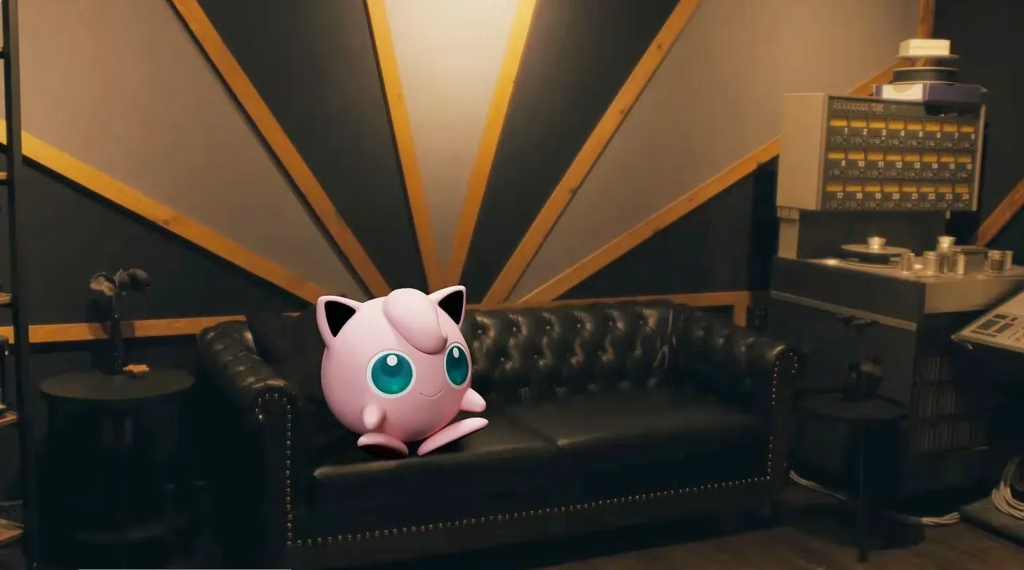
Pokémon’s stunning 30th anniversary Super Bowl commercial featuring Lady Gaga and A-list celebrities has sparked a viral controversy that’s rattling the gaming community. According to leaked development budgets, the one-minute ad’s airtime alone likely exceeded the entire production cost of Pokémon Legends: Z-A. Here’s the jaw-dropping breakdown that has fans questioning Game Freak’s priorities.
Table of Contents
Pokémon’s Numbers Don’t Lie: Cost Comparison
| Category | Estimated Cost |
|---|---|
| Super Bowl Ad (60 seconds) | $16-20 million |
| Airtime Only (30 seconds = $8.5M) | $17 million |
| Production + Celebrity Fees | $2-5 million additional |
| Pokémon Legends Z-A Development | ~$13 million (₹2 billion yen) |
| Game Launch Date | October 16, 2025 |
| Week One Revenue | $300+ million |
How Much Did That Commercial Really Cost?
According to advertising industry reports, a 30-second Super Bowl spot in 2026 costs approximately $8.5 million for airtime alone. The Pokémon commercial ran for a full minute, putting base airtime costs around $17 million—before considering production expenses.
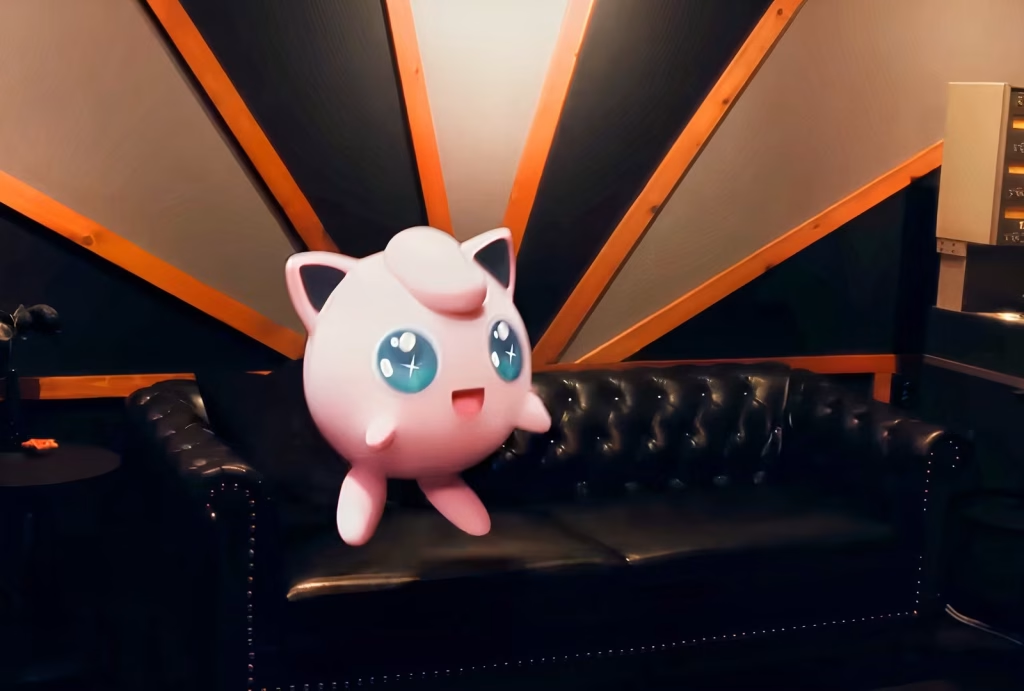
The celebrity-packed ad featured Lady Gaga (as Jigglypuff), recording studio coordination, multiple A-list appearances, and high-end production values. Industry experts estimate production costs for Super Bowl commercials average $2.1 million, with celebrity licensing adding millions more. Total investment likely reached $16-20 million for this single minute of advertising.
For context on Pokémon’s broader marketing strategies, explore our Pokémon GO 2025 features analysis to see how The Pokémon Company balances game development with promotional spending.
The Leaked Legends Z-A Budget
A major security breach involving internal Nintendo files revealed Pokémon Legends: Z-A carried a development budget of approximately 2 billion yen—roughly $13 million USD. While this figure remains unconfirmed by official sources, it aligns with mid-tier AAA game budgets for titles developed primarily by established studios with existing engine frameworks.
Released on October 16, 2025, the game earned more than $300 million within its first week, proving commercial success despite its modest development investment. For detailed Legends Z-A gameplay guides, check our Mega Dimension DLC donut crafting guide.
Why Fans Are Frustrated
The viral comparison hit a nerve because Pokémon Legends: Z-A launched with notable technical issues including visual bugs, performance drops, and polish concerns—problems many attribute to insufficient development resources. When fans discovered The Pokémon Company potentially spent more on a single commercial than the entire game’s production, frustration erupted across social media.
Reddit user comments summarized the sentiment: “This was 100% just about boosting brand recognition for the anniversary. Pokémon as a money making brand is way more than just the games.” This perspective acknowledges business realities but doesn’t ease the sting for players who want higher-quality gaming experiences.
Marketing vs. Development: Industry Reality Check
Before grabbing pitchforks, context matters. The Pokémon franchise operates as a multimedia empire—video games represent just one revenue stream alongside trading cards, anime, merchandise, theme parks, and licensing deals. Brand marketing investments protect and grow this entire ecosystem, not just game sales.
According to industry analysts, marketing budgets frequently exceed development costs for major franchises. Call of Duty, FIFA, and Assassin’s Creed titles routinely spend $50-100 million on marketing campaigns for games with similar development budgets. The Pokémon Super Bowl spot targeted brand awareness for the 30th anniversary milestone, not promoting a specific game release.
For more gaming industry analysis, visit The Pokémon Company’s official newsroom for transparent updates on franchise priorities.
What the Commercial Actually Delivered
The “What’s Your Favorite Pokémon?” spot celebrated three decades of cultural impact by featuring celebrities sharing their favorite Pokémon. Lady Gaga’s Jigglypuff segment, along with appearances from athletes, actors, and influencers, reinforced Pokémon’s cross-generational appeal.
Strategically, this investment makes sense. Super Bowl LX drew 120+ million viewers—an unmatched audience for reaching lapsed fans, introducing Pokémon to new demographics, and reminding the world why this franchise remains culturally dominant. The commercial didn’t need to sell a specific product; it sold the brand itself.
However, the timing feels tone-deaf when the most recent mainline game shipped with quality issues that more development funding could’ve addressed.
The Real Question: Resource Allocation
Should The Pokémon Company invest differently? That’s where opinions diverge sharply:
Pro-Marketing Perspective: Pokémon’s value as a multimedia brand depends on cultural relevance maintained through high-profile advertising. Without brand strength, game sales decline regardless of quality. The $16-20 million commercial protects billions in annual revenue.
Pro-Development Perspective: Players purchase games expecting AAA polish. Allocating just $13 million to a mainline title while spending similar amounts on a one-minute ad signals misplaced priorities. Better games create stronger brands organically.
Both arguments hold merit. The challenge lies in balancing short-term brand visibility with long-term product quality. For team-building strategies in Legends Z-A, explore our Ranked Season 2 guide for competitive play optimization.
Game Freak’s Development Challenges
Understanding Legends Z-A’s budget requires acknowledging Game Freak’s historical development approach. Unlike studios with 500+ developers and $200 million budgets, Game Freak operates leaner teams with tight schedules dictated by multimedia franchise coordination (anime seasons, card releases, merchandise cycles).
This constraint explains both the modest budget and technical limitations. The studio prioritizes meeting release deadlines over extended polish periods—a business decision with obvious quality trade-offs.
Fans rightfully question whether doubling the development budget to $25-30 million would deliver dramatically better experiences while still representing a fraction of Pokémon’s annual revenue (estimated $15+ billion across all products).
Moving Forward: What Fans Want
Community feedback consistently emphasizes quality over quantity. Many would prefer Game Freak delay releases for additional development time rather than rushing products to market. The Legends Z-A budget revelation crystallizes this frustration—not because marketing is inherently wasteful, but because the game’s technical issues suggest inadequate development resources.
For comprehensive Pokémon Legends Z-A character optimization, visit our Goodra perfect moveset guide and Yveltal mastery breakdown.
The Bigger Picture
Pokémon’s Super Bowl commercial costing more than Legends Z-A’s development sounds shocking in isolation. Within industry context, it reflects standard franchise management where brand marketing protects enormous revenue streams. The frustration stems not from marketing investment itself, but from visible quality gaps in the gaming products that investment should ultimately support.
As Pokémon approaches Generation 10, fans hope The Pokémon Company recognizes that exceptional games create stronger brands than expensive commercials celebrating past achievements. The franchise’s next evolution should prioritize development resources that deliver the polished experiences this beloved IP deserves.
Stay updated on Pokémon news and gaming industry analysis at TechnoSports for comprehensive coverage across all platforms.
FAQs
Is the $13 million Pokémon Legends Z-A development budget confirmed official?
No, the $13 million figure comes from leaked Nintendo documents following a security breach. While widely reported and seemingly credible based on industry standards, The Pokémon Company has not officially confirmed this budget amount.
Why would The Pokémon Company spend more on advertising than game development?
Pokémon operates as a multimedia franchise where brand strength drives revenue across games, cards, merchandise, and licensing. A Super Bowl ad reaches 120+ million viewers to maintain cultural relevance, protecting billions in annual revenue. However, fans reasonably argue better games would strengthen the brand more effectively than expensive commercials.