
While hype trains for upcoming MMOs generate buzz, the genre’s true champions are those that have survived years of competition and emerged stronger. These evergreen MMOs entering 2026 offer proven gameplay, active communities, and continuous developer support—qualities flashy newcomers can only promise. Here are five established virtual worlds worth your time and investment.
Table of Contents
What Makes an MMOs “Evergreen”?
Evergreen MMOs maintain healthy player populations, receive regular content updates, and demonstrate financial stability year after year. Unlike games that spike at launch then fade, these titles have proven long-term viability, making them safe choices for players seeking lasting communities and worthwhile time investments.
5 Evergreen MMOs Still Dominating
| MMO | Biggest Pro | Notable Con | 2026 Status |
|---|---|---|---|
| World of Warcraft | 20+ years proven, Midnight expansion + housing | Subscription required + expansion costs | Thriving with Classic & Retail |
| Final Fantasy XIV | Best storytelling in genre, strong community | Mandatory 400+ hour story grind | Next expansion hype building |
| Guild Wars 2 | No subscription, Visions of Eternity content | Combat may feel floaty to some | Annual expansions since 2022 |
| Elder Scrolls Online | Massive content library, recognizable IP | Rocky 2025 but stabilizing | ZeniMax’s priority after Blackbird cancellation |
| Old School RuneScape | Zero pay-to-win, vibrant classic community | Primitive graphics turn off newcomers | Die-hard following still growing |
World of Warcraft: The Immortal King
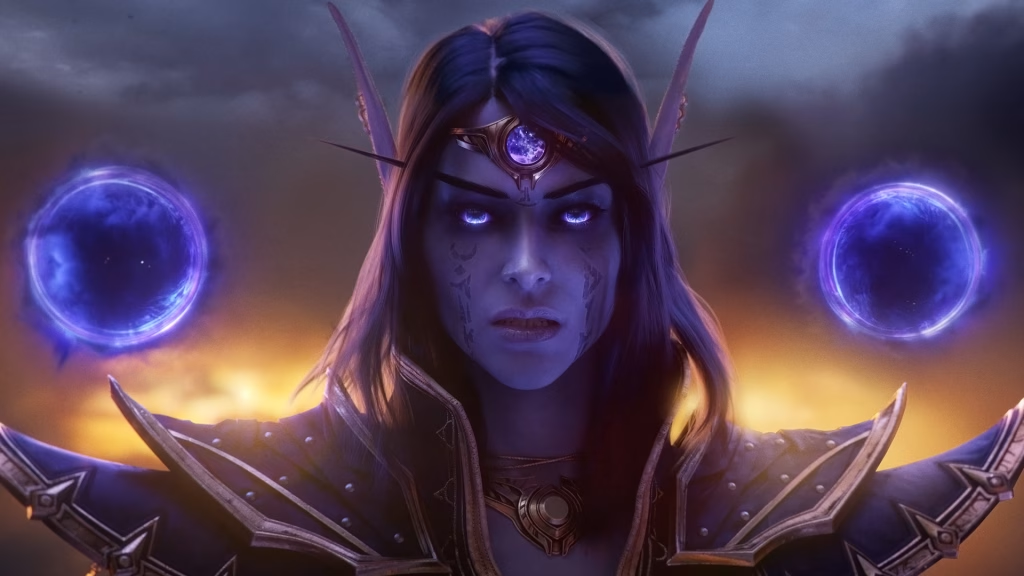
Why It’s Still Relevant: WoW’s 2026 looks exceptional with the Midnight expansion introducing long-awaited player housing—a feature fans have demanded for decades. The dual-track approach continues, offering both modern retail content and Classic Burning Crusade servers for nostalgic players.
The Catch: Monthly subscriptions plus expansion purchases create significant financial commitment. New players face years of catchup content, though level boosts help.
Best For: Players seeking the most polished theme park MMO experience with endless endgame activities including mythic dungeons, raids, and competitive PvP.
Final Fantasy XIV: The Story Powerhouse
Why It’s Still Relevant: FFXIV’s narrative-driven approach creates emotional investment unmatched in the genre. The passionate community and Square Enix’s consistent expansion schedule ensure a steady stream of content. Following a quiet 2025, fans anticipate major 2026 announcements.
The Catch: The mandatory story progression through hundreds of hours can feel overwhelming. You cannot skip to endgame—the journey IS the content.
Best For: Story-focused players who value character development and narrative depth over instant gratification, plus those seeking welcoming communities.
Guild Wars 2: The No-Subscription Champion
Why It’s Still Relevant: ArenaNet’s commitment shines through annual expansions since 2022, with Visions of Eternity delivering nine new elite specializations in October 2025. The buy-to-play model means no recurring fees—purchase once, play forever.
The Catch: Combat feels less impactful than tab-target systems, and the action-oriented gameplay doesn’t resonate with traditional MMO purists.
Best For: Casual players seeking flexible engagement without subscription pressure, exploration enthusiasts who love discovery over grinding.
Elder Scrolls Online: The Comeback Candidate
Why It’s Still Relevant: Despite 2025 struggles, ESO remains content-rich with recognizable Elder Scrolls lore. ZeniMax’s Blackbird cancellation means increased focus on ESO as the studio’s flagship product, potentially leading to renewed investment.
The Catch: Performance issues and an overwhelming amount of content create decision paralysis for newcomers trying to determine where to start.
Best For: Elder Scrolls fans wanting multiplayer experiences in Tamriel, solo-friendly players who appreciate optional group content.
Old School RuneScape: The Nostalgia Machine
Why It’s Still Relevant: OSRS maintains one of gaming’s most dedicated communities eight years after its 2013 revival. The authentic old-school grind appeals to players tired of modern MMO convenience, while the complete absence of pay-to-win mechanics ensures fairness.
The Catch: Dated graphics and slow progression deter players accustomed to modern gaming conveniences and visual polish.
Best For: Grind-loving players who appreciate methodical progression, community-driven content where player votes determine updates.
Looking to dive deeper into MMO mechanics and optimization? Explore our complete MMO beginner’s guide and endgame progression strategies to accelerate your journey through these massive worlds.
For official updates on these titles, visit each game’s website: World of Warcraft, Final Fantasy XIV, Guild Wars 2, Elder Scrolls Online, and Old School RuneScape.
Frequently Asked Questions
Q: Are these MMOs newcomer-friendly, or do I need years of experience to enjoy them in 2026?
All five MMOs offer new player experiences, though quality varies significantly. Guild Wars 2 and ESO provide the smoothest onboarding with level-scaling systems that let you play with veteran friends immediately. FFXIV’s mandatory story creates a 400+ hour journey before reaching current content, but the narrative payoff satisfies patient players. WoW sells level boosts and offers robust tutorial systems, though the endgame learning curve remains steep. OSRS embraces its complexity without handholding—expect community wikis to become your best friends. The verdict? Guild Wars 2 wins for immediate accessibility, while FFXIV requires commitment but rewards dedication.
Q: With so many upcoming MMOs hyped for 2026 releases, why should I invest time in these older games instead of waiting for something new?
Evergreen MMOs offer proven stability that newcomers cannot guarantee. Ashes of Creation, Chrono Odyssey, and other 2026 hopefuls may launch with bugs, server issues, or worse—population collapses after initial hype fades. These five titles have survived multiple MMO generation cycles, demonstrating staying power that validates your time investment. Additionally, established MMOs provide years of accumulated content immediately available, while new releases offer limited launch content expecting players to wait for updates. Consider this: would you rather join a thriving 10-year community with proven longevity or gamble on an unproven title that might shutter servers within two years? Play proven winners now, experiment with newcomers later.