
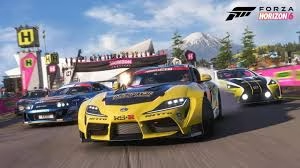
Forza Horizon 6 drops you into Japan’s most demanding roads the series has ever seen — tight Tokyo streets, winding mountain passes, and legendary Touge routes. A fast car with a bad tune will get embarrassed. A modest car with a great tune will win. Here’s your complete tuning breakdown.
Table of Contents
Why Tuning Matters More in FH6
FH6 rewards cars that can brake late, rotate cleanly, and stay stable under weight transfer. The fastest FH6 builds are not always the highest horsepower builds — on tight circuits and Touge roads, the winning car is the one that brakes cleanly, turns in hard, stays stable, and exits without wasting grip. GGWTB
Because FH6 uses rebalanced car classes, old tunes from previous games cannot be imported — you’ll need to build your setups from scratch using the updated engine mechanics.
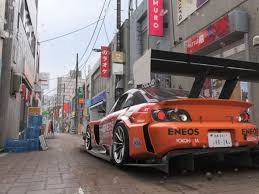
Best Upgrade Order Before You Tune
When upgrading cars, it’s better to keep them in the same class or at most two classes higher. Prioritize upgrades on parts that have tuning options like differentials, then focus on the right tire compound, aerodynamics, and suspension. Focus your PI cost priority on reducing weight first, then spend the rest on power. GGGAMER
Key Tuning Settings — Quick Reference
| Setting | What It Does | FH6 Recommendation |
|---|---|---|
| Tire Pressure | Affects traction and cornering | 28–32 PSI for optimal grip |
| Front Camber | Grip in turns | -1.5 to -2.5 degrees |
| Rear Camber | Stability mid-corner | -1.0 to -2.0 degrees |
| Gearing | Acceleration vs top speed | Shorten for tight tracks, lengthen for straights |
| ARBs | Body roll vs grip | Start softer for bump stability |
| Springs | Handling stiffness | Softer for off-road, stiffer for circuit |
| Differential | Power delivery | Balance for clean exits |
Core Tuning Tips by Category
Tires: Tires and brakes received big changes in FH6 — the range of effectiveness for tire compounds is much wider now. Bad tires got worse and good tires got better. Upgrading your front tire width has a big impact on gameplay. GGGAMER
Suspension: Try to adjust your ARBs so your mechanical balance reaches around 0.55 to 0.65. The higher this number, the more front grip you have compared to the rear. Spring stiffness should go opposite to your ARB settings — if you lower the front ARB, increase front spring stiffness to keep stability. GGGAMER
Drivetrain: In lower to mid classes, AWD is fine. In higher classes like A-Class, RWD can keep things competitive. For off-road races, AWD is preferred. GGGAMER
Drift Builds: RWD is mandatory for Drift Zone scoring — AWD builds do not count. A well-tuned B-Class drift car will outscore an untouched S1 car in most Drift Zones. Turn off Stability Control and Traction Control before drifting anything. Gaming ProMax
Fix Common Handling Problems Fast
If your car feels fast but awful in corners, stop adding horsepower — upgrade front grip, brakes, suspension, and weight reduction first. The result is cleaner entries, less lockup, and better exits. GGWTB
A well-tuned B-Class or A-Class car is often more rewarding for dense, technical districts than an uncontrollable S2-Class hypercar. Tuning for stability rather than raw top speed helps earn more credits through Clean Racing multipliers, which are more punishing in this installment. U4n
For more Forza Horizon 6 tips, car tier lists, and the best builds by class, visit our FH6 gaming hub on TechnoSports and our racing game guides section to stay ahead of the meta.
To learn more about the real-world cars featured in the game and their engineering, check out the Forza Horizon Wikipedia page.
FAQs
Q: Can I import my Forza Horizon 5 tunes into FH6?
No — FH6 uses rebalanced car classes and updated engine mechanics, meaning old tunes from previous games cannot be imported and all setups must be built from scratch. U4n
Q: What’s the best starting point for tuning a new car in FH6?
Open the main menu, go to the Cars tab, select the vehicle, then choose Tune Car — start with tires and brakes before touching power settings, and always test on the road type you plan to race on.