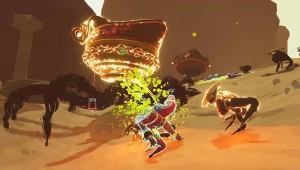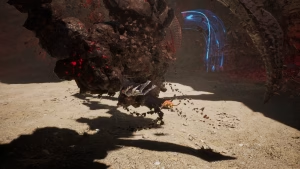
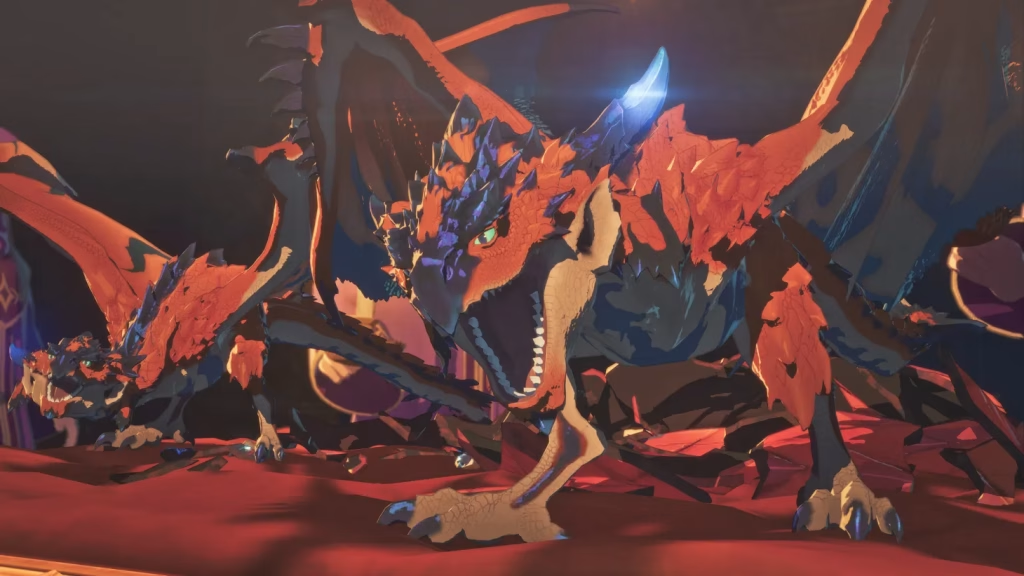
One of the most exciting mechanics in Monster Hunter Stories 3: Twisted Reflection is the ability to alter your Monstie’s element — turning a standard Fire lizard into a terrifying Fire/Ice hybrid. It sounds complex, but once you understand the Habitat Restoration system, it’s surprisingly intuitive. Here’s everything you need to know.
Table of Contents
Can You Actually Change a Monster’s Element?
Sort of — and this is important. You can only add a new typing to generate dual-element Monsties. You cannot remove their existing element. So plan carefully before committing, because once a monster has taken a secondary element, it cannot be removed. Wikipedia
How It Works: Habitat Restoration
The process is straightforward — select a particular kind of monster and release it into a specific habitat. As the Ecosystem Rank rises while they are in those areas, the odds of finding eggs of that monster’s kind that have absorbed the area’s designated element will increase.
The higher the ecosystem rank, the higher the chances of finding these mutated eggs. Patience pays off here.
Area Elements at a Glance
| Area | Element Granted |
|---|---|
| Sunpetal Plains | 🔥 Fire |
| Cobalt Coast | 💧 Water |
| Stormridge Peaks | ⚡ Thunder |
| Frostveil Tundra | ❄️ Ice |
| Ashenfell Ruins | 🐉 Dragon |
| Blightstone Woods | ⚪ Non-Element |
Non-element is considered an element on its own — raising a monster in Blightstone Woods will still apply Non-element as a valid secondary type.
Bonus: Double-Element Typing
It is possible for a Monstie to gain dual typing with two identical elements. For example, raising the Ecosystem Rank of Anjanath — a Fire-element monster — in Sunpetal Plains will result in its element becoming Fire/Fire. This double typing expands the Monstie’s available skill pool to include unique egg skills. Wikipedia
Why Bother Changing Elements?
Dual-element Monsties gain access to more starting genes and resistances — and adapting an extra type also comes with some new weaknesses, so pre-planning is a good idea. Game8 The visual payoff is real too: some monsters take on the element of their designated area and visually change in the process — like a red Zinogre that specialises in fire instead of thunder. Game8
For full Monstie build guides and tier lists, visit TechnoSports for the latest MHS3 strategies and updates.
Learn more about how elements work across the Monster Hunter universe on the Monster Hunter Wiki’s official element page.
FAQs
Q: Can I remove a secondary element once it’s been added?
No — once a monster has taken a secondary element, it cannot be removed, so it’s important to plan ahead and target specific dual-type Monstie goals before heading into Habitat Restoration. Wikipedia
Q: What happens if I release a Fire-type Monstie into a Fire habitat?
If you raise a monster that already shares the same typing as the area element — for example a Fire Monstie in Sunpetal Plains — eggs can spawn with a double typing of that element, in this case Fire/Fire, unlocking unique egg skills.