Every manager career starts the same way: you scroll past Mbappé and Haaland, sigh at the price tag, and wonder where the next one is hiding. Good news — EA FC 27’s rebuilt Transfer Market and Dynamic OVR system (which reacts to a player’s form, morale and fitness) make scouting raw teenage strikers more rewarding than ever. Sign the right kid at 17, nurture him through two seasons, and you’ve got a Ballon d’Or contender for a fraction of the cost.
Table of Contents
EA FC 27 : Overview
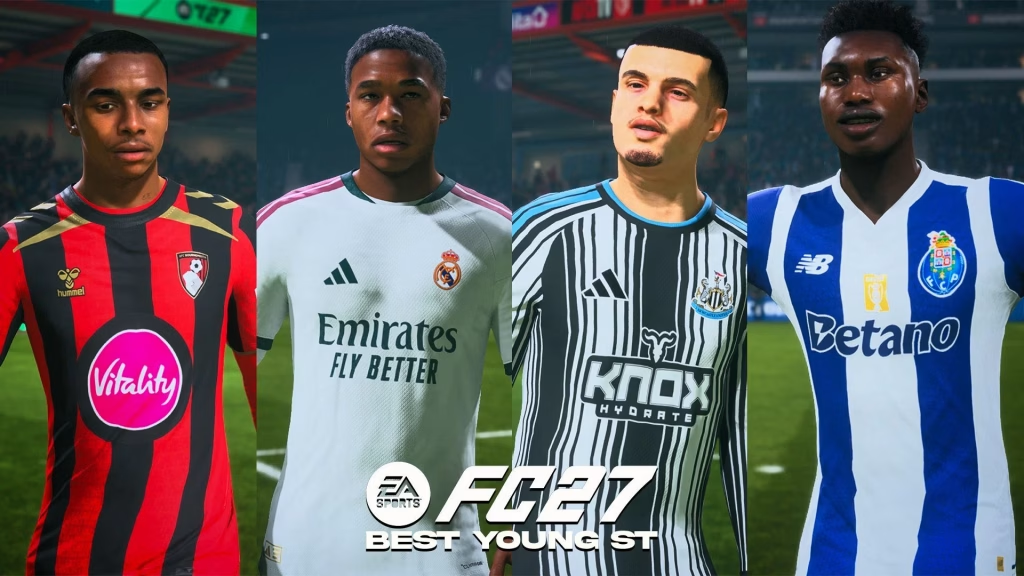
| Player | Age | Club | Why He’s Worth It |
|---|---|---|---|
| Endrick | 20 | Real Madrid | Explosive in the box, minimal development risk |
| Chido Obi | 18 | Manchester United | Cheap, hungry, elite long-term ceiling |
| Rodrigo Mora | 19 | Porto | Quick, direct, thrives on counters |
| Assane Diao | 20 | Como | Underrated pace and finishing combo |
| Roony Bardghji | 20 | Barcelona | Best used as a support striker/winger hybrid |
Pro tip: Don’t just chase potential ratings. A striker’s role in your tactics — target man, poacher, or false nine — matters just as much as his stats. Match the player to your system, not the other way around.
Since FC 27 launched worldwide on September 25, its Manager Career overhaul has made this kind of early scouting genuinely useful — if you missed how the transfer market changed this year, TechnoSports has a solid breakdown of everything new in EA Sports FC 27.
The real trick? Sign two or three of these guys in your very first transfer window, rotate them for game time, and let the new negotiation tactics — buy-back and performance clauses — work in your favor. By season three, you’ll be selling 90-rated strikers for triple what you paid.
FAQs
Q1. What’s the best age to sign a young striker in FC 27?
17–19 is the sweet spot — cheap enough to afford, young enough to fully develop before their prime years.
Q2. Does potential matter more than current overall rating?
For career mode, yes — a lower-rated teen with high potential will outgrow an expensive, already-peaked veteran.