
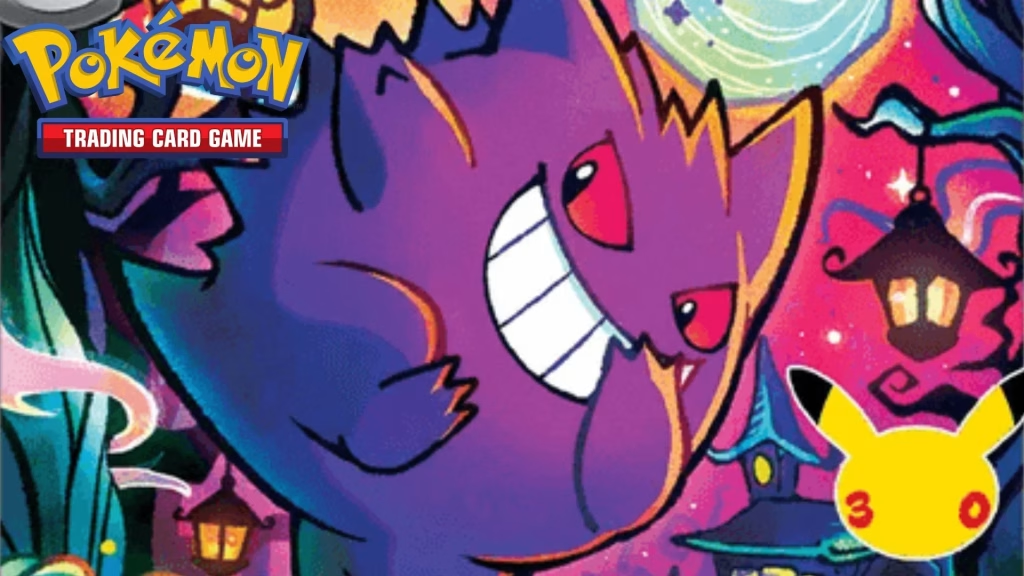
Some decks win by dealing damage. This one wins by making your opponent afraid to deal it back. The Gengar ex (30th Celebration) deck is one of the most tactically interesting builds in the current Pokémon TCG meta, blending Darkness-type disruption with a genuinely clever Prize-trading mechanic. Here’s the full decklist and the strategy that makes it work.
Table of Contents
Complete Gengar ex Decklist
| Category | Cards |
|---|---|
| Pokémon (23) | 4 Gastly, 2 Haunter, 2 Mega Gengar ex, 3 Gengar ex (30C), 2 Toxel, 2 Toxtricity, 1 Pecharunt ex, 1 Fezandipiti ex, 1 Tatsugiri, 1 Psyduck, 1 Shaymin, 1 Yveltal, 2 Munkidori |
| Trainers (29) | 4 Lillie’s Determination, 4 Grimsley’s Move, 1 Hilda, 1 Boss’s Orders, 1 Judge, 2 Buddy-Buddy Poffin, 2 Poké Pad, 4 Rare Candy, 2 Pokégear 3.0, 1 Sacred Ash, 2 Night Stretcher, 1 Energy Recycler, 1 Air Balloon, 3 Academy at Night |
| Energy (8) | 7 Darkness Energy, 1 Neo Upper Energy |
The Core Strategy: Fainting Spell Meets Shadowy Concealment
Gengar ex’s Ability, Fainting Spell, gives it a real edge in trades, but the trick lies in pairing it with Mega Gengar ex from Phantasmal Flames. Mega Gengar’s Ability, Shadowy Concealment, reduces the Prize cards your opponent takes for each Darkness Pokémon they KO with their own Pokémon ex — meaning your Gengar ex only gives up one Prize instead of two when knocked out.
That Prize-efficiency advantage is what makes this deck genuinely aggressive rather than just defensive.
Chaotic Pain: The Deck’s Real Engine
Gengar ex’s attack, Chaotic Pain, costs just two Darkness Energy and lets you place 13 damage counters on any of your opponent’s Pokémon — enough to threaten a Prize almost immediately. To consistently meet that energy requirement, Toxtricity’s Ability, Sinister Surge, helps accelerate energy onto the board, while Munkidori’s Adrena-Brain Ability piles on even more damage counters once Gengar ex has already dealt some.
Keeping the Evolution Line Consistent
Running multiple copies of both Gengar ex and Mega Gengar ex means you need a steady supply of Gastly and Haunter. That’s where Grimsley’s Move comes in — this Supporter lets you place a Darkness Pokémon directly from the top seven cards of your deck onto your Bench. To make sure a Darkness Pokémon is actually sitting in those top seven cards, the deck also runs the Stadium card Academy at Night, which lets you place a card from your hand onto the top of your deck, setting up your next Grimsley’s Move draw.
Best and Worst Matchups
This deck isn’t unbeatable. Alakazam can bypass Fainting Spell entirely, neutralizing one of Gengar ex’s key defensive tools. On the flip side, Mega Kangaskhan ex tends to think twice before attacking Gengar ex directly, given the Prize-trade risk involved — making this deck a genuinely favorable matchup against heavier hitters that rely on straightforward knockouts.
Gengar itself remains one of the most iconic entries in the broader Pokémon franchise, and this 30th Celebration card gives the fan-favorite Ghost-type a genuinely competitive, mechanically rich role in today’s meta.
For more Pokémon TCG deck guides, set breakdowns, and competitive strategy, check out the latest coverage on technosports.co.in.
FAQs
Q1: What does Gengar ex’s Chaotic Pain attack do?
For two Darkness Energy, it places 13 damage counters on one of your opponent’s Pokémon.
Q2: Why pair Gengar ex with Mega Gengar ex?
Mega Gengar ex’s Shadowy Concealment Ability reduces Prize card losses when your Darkness Pokémon are knocked out.