Master Valorant’s Summit map with comprehensive smoke placement strategy enabling superior map control and tactical advantage!
Table of Contents
Understanding Valorant Summit Map & Smoke Mechanics
Valorant, Riot Games’ competitive tactical shooter, features complex map designs requiring sophisticated utility usage strategy. Summit represents popular competitive map demanding comprehensive smoke spot knowledge for optimal team coordination and site control. Smoke mechanics providing temporary vision obstruction enable strategic positioning and information denial creating tactical advantages. Understanding smoke placement fundamentals enables players executing sophisticated strategies transcending basic site execution.
Summit’s distinctive terrain including multiple elevation changes, interconnected site design, and diverse engagement ranges necessitate specialized smoke knowledge. Effective smoke placement transforms map dynamics by obscuring defender positions and enabling attacker site access. Strategic smoke utilization separates professional-level play from casual execution through precise timing and positioning. Comprehensive smoke spot mastery enables players optimizing team utility efficiency and maximizing tactical superiority.
Attacking A-Site Smoke Spots & Strategies
Main Entrance Smoke Placement:
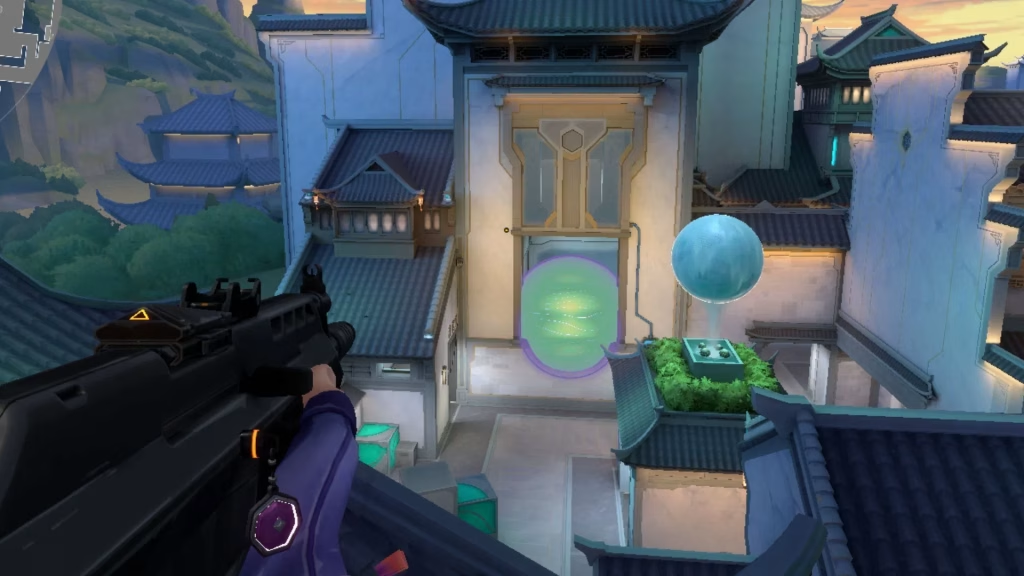
Placing smoke at A-Main entrance obscures defender vision preventing early peeks and information gathering. Smoke timing coordinating with site execute prevents defender repositioning. Main entrance smoke enabling team site access through protected movement. Multiple utility combinations following main smoke enable comprehensive site entry control.
A-Lobby Smoke Coverage:
Smoke obscuring A-Lobby denies defender high-ground advantage and information accessibility. Lobby smoke preventing defender rotations through main pathway. Lobby smoke placement enabling site plant setup without defender interference. Coordinated utility following lobby smoke maximizes site control probability.
Rafters Smoke Positioning:
Smoke obscuring rafters area denies defender elevated positioning and information control. Rafters smoke preventing peak angles and defensive setup completion. Smoke timing enabling attacker site execution without elevated defensive threat. Upper-site defender denial simplifying site entry and plant execution.
Tower Smoke Placement:
Smoke obscuring tower area prevents defender information gathering from elevated position. Tower smoke denying information advantage enabling attacker site surprise. Smoke placement coordinating with entry team movement preventing defender repositioning. Tower isolation enabling focused A-site execution without tower-based defense.
Discover Valorant strategy: Explore our comprehensive gaming guides and Valorant tips for advanced tactical strategy and professional-level guidance!
Attacking B-Site Smoke Spots & Tactical Application
B-Entrance Smoke Blocking:
Smoke obscuring B-entrance denies defender information and initial position confirmation. Entrance smoke preventing defender early rotations and setup completion. Smoke timing coordinating with attacker B-site approach enabling site entry. Protected movement through entrance smoke enables team site access.
Nest Smoke Placement:
Smoke obscuring nest area eliminates defender high-ground advantage and information gathering. Nest smoke denying elevated defensive positioning preventing overwhelming defense. Smoke positioning enabling site plant execution without elevated threat. Coordinated smoke timing preventing defender repositioning during attack execution.
Link Smoke Covering:
Smoke obscuring link area denies defender rotation pathway and information communication. Link smoke preventing defender coordinate positioning through rotation pathway. Smoke placement cutting communication between A and B defenders. Isolated defender groups experiencing coordination difficulty under smoke pressure.
Long Hallway Smoke Positioning:
Smoke obscuring long hallway prevents extended-range defender engagement. Hallway smoke preventing defender information gathering from extended positions. Smoke coverage enabling protected attacker approach along hallway corridor. Progressive smoke placement supporting advancing attacker position advancement.
Window Smoke Placement:
Smoke obscuring window area denies defender exterior position and information advantage. Window smoke preventing defender external monitoring and early warning. Smoke placement enabling protected site entry from alternate routes. Exterior position denial simplifying site entry execution.
Defending Smoke Prevention & Counter-Strategies
Smoke Detection & Pre-emptive Positioning:
Radar information and audio cues enabling smoke anticipation and defensive repositioning. Sound-cue analysis predicting smoke placement enabling defender position adjustment. Radar information guiding defensive setup avoiding smoke vulnerability. Information gathering preventing defenders being caught unprepared by smoke execution.
Anti-Smoke Defensive Positioning:
Positioning avoiding common smoke placement enabling vision maintenance. Elevated positions transcending typical smoke height enabling information retention. Strategic positioning enabling defender peeking through smoke gaps. Defensive positioning flexibility adapting to executed smoke configuration.
Utility Usage Denial & Smoke Disruption:
Damaging utility denying attacker resources through strategic ability usage. Utility denial forcing attacker alternative smoke combinations and strategy adaptation. Controller pressure through ability usage preventing smoke completion. Defensive utility forcing smoke timing adjustment and site execute delay.
Information Preservation & Communication:
Loud callout communication enabling team awareness despite smoke vision loss. Position information sharing enabling coordinated defense despite visual obscuration. Team communication maintaining coordination and defensive positioning despite smoke pressure. Callout discipline enabling defense execution despite information limitations.
| Smoke Aspect | Details |
|---|---|
| Map Name | Summit (Valorant) |
| Smoke Type | Vision Obstruction Utility |
| Strategic Purpose | Map Control, Information Denial |
| Skill Requirement | Intermediate-Advanced |
| Team Application | Coordinated Execution |
| Learning Curve | Moderate (Positioning Practice) |
| Competitive Impact | High (Professional Play Essential) |
Mid-Map Control & Rotation Smoke Spots
Mid-Market Smoke Placement:
Smoke obscuring mid-market area denies information regarding mid control and rotation. Mid smoke preventing information gathering enabling team strategy flexibility. Smoke placement supporting mid-area rotation denial. Information denial enabling surprise rotation execution.
Mid-Tower Smoke Coverage:
Smoke obscuring mid-tower prevents information gathering from elevated position. Tower smoke denying rotation information and map control assessment. Smoke positioning blocking extended-range information advantages. Elevation denial simplifying mid-control maintenance.
Choke Point Smoke Blocking:
Smoke obscuring main choke point between sites enables mid-area control denial. Choke smoke preventing enemy rotation and information communication. Smoke placement forcing rotation adaptation and strategy adjustment. Information denial enabling tactical flexibility and site rotation secrecy.
Utility Combination Strategies & Synergy
Multi-Smoke Coordinated Execution:
Multiple smoke placement enabling comprehensive vision denial across site areas. Coordinated timing enabling sequential site exposure prevention. Team utility combinations supporting site entry through vision obstruction. Synergistic utility usage maximizing site control probability.
Smoke-Flash Combinations:
Smoke placement preceding flash ability usage enabling blinded information denial. Sequential utility execution preventing defender reaction and repositioning. Blind-smoke combination overwhelming defense through visibility loss and awareness disruption. Combination timing creating decisive engagement advantage.
Smoke-Initiator Synergy:
Smoke coverage enabling initiator information gathering with reduced risk. Initiator ability usage within smoke protection enabling safe positioning revelation. Synergistic utility enabling team information advantage despite vision loss. Coordinated timing supporting initiator vulnerability management.
Advanced Smoke Mechanics & Professional Techniques
Smoke Jump Execution:
Precise positioning enabling player movement through smoke placement. Jump timing and positioning enabling smoke transit while maintaining vision advantage. Advanced movement enabling surprise positioning transcending typical entry routes. Professional-level technique requiring precision and practice.
One-Way Smoke Placement:
Smoke positioning enabling attacker vision maintenance through angle exploitation. One-way angles enabling information gathering advantage despite smoke coverage. Precise positioning preventing defender vision through similar angles. Advanced technique enabling information advantage during smoke execution.
Smoke Duration Management:
Timing smoke expiration coordinating with site execute completion. Duration awareness enabling team repositioning before smoke termination. Duration timing preventing premature defender repositioning. Smoke timing coordination with team movement preventing vulnerability windows.
Common Smoke Mistakes & Avoidance Strategies
Mistake 1: Ineffective Smoke Timing:
Poorly-timed smoke placement enabling defender repositioning before attacker execution. Early smoke completion allowing defender setup during attack. Late smoke enabling defender information gathering during attacker approach. Precise timing preventing defender adaptation and maintaining tactical advantage.
Mistake 2: Inadequate Smoke Coverage:
Incomplete smoke coverage leaving defender information angles accessible. Gap exploitation enabling defender information gathering despite smoke attempt. Coverage comprehensiveness preventing information advantage. Full coverage coordination preventing defensive information advantage.
Mistake 3: Predictable Smoke Patterns:
Repetitive smoke placement enabling defender anticipation and adaptation. Pattern recognition preventing smoke effectiveness through positional adjustment. Variation requirement preventing defender adaptation to smoke strategy. Unpredictable execution maintaining tactical advantage.
Mistake 4: Poor Smoke Positioning:
Suboptimal smoke placement failing to obstruct key defender positions. Positioning accuracy preventing information denial objectives. Placement precision enabling comprehensive vision obstruction. Strategic placement maximizing defensive disadvantage.
Mistake 5: Team Coordination Failure:
Insufficient team communication regarding smoke strategy and timing. Coordination breakdown preventing synchronized execution. Communication clarity enabling unified site execution. Team alignment maximizing utility synergy.
Smoke Spot Video Guide Recommendations
Professional Smoke Tutorials:
YouTube professional Valorant coaches providing comprehensive smoke spot guides. Video walkthroughs demonstrating precise smoke placement and timing. Visual learning enabling practical smoke execution. Professional instruction accelerating learning curve.
Pro Player Gameplay Footage:
Professional player stream recordings demonstrating competitive-level smoke usage. Real-game application revealing professional-standard execution and timing. Performance analysis identifying optimization opportunities. Professional-level reference material supporting skill development.
Community Guides & Resources:
Community-created smoke spot compilations and strategy guides. Accessible learning resources supporting widespread skill development. Diverse perspective compilation providing comprehensive coverage. Community contribution supporting collaborative knowledge development.
Practice Methodology & Skill Development
Practice Range Smoke Execution:
Valorant practice range enabling smoke placement practice without competitive pressure. Repetition enabling muscle memory development and timing refinement. Angle verification confirming placement accuracy. Foundational skill development supporting competitive application.
Custom Game Practice:
Custom games enabling controlled practice scenarios and specific smoke spot repetition. Team coordination practice during custom match execution. Utility combination testing identifying synergistic approaches. Controlled environment supporting skill development.
Competitive Match Application:
Gradual competitive integration applying developing skills during ranked matches. Match experience providing real-game pressure and decision-making practice. Competitive feedback enabling strategy optimization. Practical application supporting skill consolidation.
Map-Specific Context & Strategic Importance
Summit Map Characteristics:
Distinctive elevation changes requiring specialized smoke knowledge. Site design interconnectedness enabling smoke utility efficiency. Engagement range diversity requiring multiple smoke strategies. Map complexity justifying comprehensive smoke spot mastery.
Site Design Implications:
A-site elevation variation requiring elevated smoke placement and coverage. B-site interconnected design requiring comprehensive vision denial. Mid-area configuration enabling rotation control through smoke strategy. Map geography influencing smoke spot effectiveness and placement.
Professional Match Analysis & Application
Professional Smoke Usage Patterns:
Competitive-level smoke strategy analysis identifying optimal execution. Professional match footage revealing high-level smoke coordination. Strategy implementation from professional matches enabling skill acceleration. Professional standard reference supporting competitive progression.
Patch Changes & Smoke Mechanic Evolution
Ability Adjustment Impact:
Smoke duration or coverage changes affecting smoke spot effectiveness. Mechanic changes requiring strategy adaptation and repositioning. Balance adjustments influencing smoke utility economy. Patch awareness enabling strategy currency maintenance.
Quick FAQs
Q: What are the most effective smoke spots on Valorant’s Summit map for attacking A-site, and how should players coordinate timing with team entry?
A: Critical A-site smoke spots include Main Entrance (blocking defender early information), A-Lobby (denying high-ground advantage), Rafters (preventing elevated defender positioning), and Tower (isolating upper-site defense); coordinated timing enables sequential smoke execution supporting protected site entry and preventing defender repositioning during attack progression.
Q: How should players develop smoke spot mastery on Summit, and what practice methodology accelerates skill development before competitive application?
A: Begin with practice range smoke execution building muscle memory for precise placement; progress to custom game practice enabling team coordination and utility combination testing; gradually integrate into ranked matches applying developing skills under competitive conditions—video guide study of professional player execution accelerates learning through visual reference material supplementing practical experience.