Ring in 2026 with a fresh NYT Strands puzzle that’s all about everyone’s favorite morning ritual—coffee! Today’s “Not your average joe” theme features seven descriptive words that capture the sensory experience of premium coffee, plus a one-word spangram that ties everything together. Whether you’re stuck on finding NUTTY or can’t spot VELVETY, we’ve got the complete solution breakdown below to keep your daily streak alive.
Table of Contents
NYT Strands #669 Complete Answers & Theme
| Answer Type | Word(s) | Category |
|---|---|---|
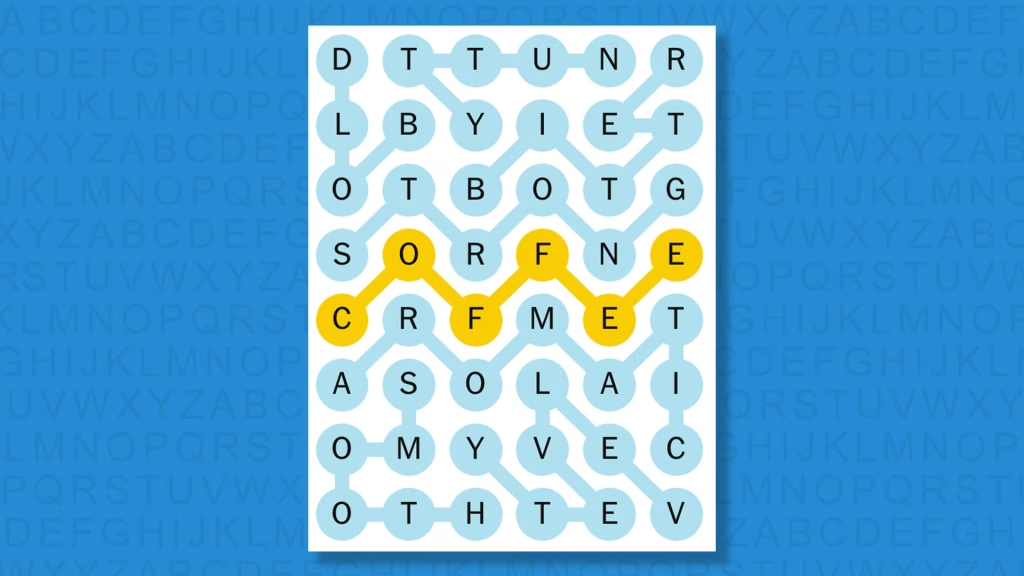
| Spangram | COFFEE | Theme connector (horizontal) |
| Theme Word 1 | AROMATIC | Smell descriptor |
| Theme Word 2 | BITTER | Taste descriptor |
| Theme Word 3 | BOLD | Flavor intensity |
| Theme Word 4 | NUTTY | Flavor profile |
| Theme Word 5 | SMOOTH | Mouthfeel descriptor |
| Theme Word 6 | STRONG | Intensity descriptor |
| Theme Word 7 | VELVETY | Texture descriptor |
Understanding Today’s “Not Your Average Joe” Theme
The New York Times Strands puzzle for January 1st cleverly plays on the phrase “average joe,” which commonly refers to regular coffee. Today’s theme asks players to find words that describe specialty or premium coffee characteristics—the kind of descriptors you’d see on artisan coffee bags or hear baristas use when discussing tasting notes. Discover more puzzle game solutions on TechnoSports.
The spangram COFFEE runs horizontally across the board, connecting all seven sensory descriptors. These words span three sensory categories: smell (AROMATIC), taste (BITTER, NUTTY), and texture (SMOOTH, VELVETY). This multi-sensory approach made today’s puzzle moderately challenging, as players needed to think beyond literal coffee-related objects and focus instead on qualities and impressions.
Strategic Hints Without Spoilers
If you’re attempting the puzzle independently, here are progressive hints that reveal just enough without completely spoiling the experience:
Hint Level 1: Theme Direction
Think about how coffee connoisseurs describe their favorite roasts. Focus on adjectives rather than nouns—you’re looking for qualities, not objects. Consider what you’d read on a specialty coffee bag’s tasting notes.
Hint Level 2: Word Categories
The seven words break into three sensory groups: how coffee smells, how it tastes, and how it feels in your mouth. Some describe intensity (like strength or boldness), while others describe specific flavors or textures. Explore mobile gaming content on TechnoSports.
Hint Level 3: Starting Points
The spangram is unusually short—just one word running horizontally. Start by locating common coffee descriptors like BOLD or SMOOTH, which are easier to spot. VELVETY and AROMATIC proved trickiest for most players due to their length and diagonal orientations.
How to Play NYT Strands Like a Pro
For newcomers to Strands, understanding the mechanics maximizes your solving efficiency. According to official NYT instructions, you’re presented with a 6×8 letter grid where every letter gets used exactly once. Words can snake in any direction—up, down, sideways, or diagonally—and letters connect adjacently without overlapping between different theme words.
The built-in hint system rewards exploration: find three non-theme words of four letters or more, and you unlock one hint that highlights letters belonging to a theme word (without showing how they connect). Find three more non-theme words, unlock another hint. This system encourages active participation rather than passive guessing. Master more word puzzle strategies on TechnoSports.
Why Today’s Puzzle Felt Different
Puzzle #669 marked an interesting departure from recent Strands patterns. The one-word spangram (COFFEE) was remarkably short compared to typical two-word phrases that dominated late 2025. This brevity initially confused players who expected longer connecting phrases, making the solve feel simultaneously easier (fewer letters to track) and harder (less obvious theme connection).
Additionally, the sensory vocabulary shifted focus from concrete objects to abstract descriptors. Instead of naming coffee-related items like “mug,” “bean,” or “grinder,” today’s puzzle emphasized experiential language—how coffee makes you feel rather than what coffee involves. This linguistic approach elevated difficulty for players more accustomed to literal word searches.
Common Mistakes Players Made Today
Many solvers initially pursued words related to people named Joe (like famous Joes in history or pop culture), completely missing the coffee connection until discovering the spangram. Others focused on coffee preparation methods (brew, steep, grind) rather than sensory descriptors, leading to dead ends.
NUTTY and BITTER posed particular challenges due to their diagonal placements and overlapping letter paths with other potential non-theme words. VELVETY stumped players unfamiliar with coffee terminology who hadn’t encountered “mouthfeel” descriptions in specialty coffee contexts. The solution required thinking like a sommelier, not just a casual coffee drinker.
The Growing Strands Community
Since graduating from beta to permanent NYT Games status, Strands has cultivated a dedicated player base rivaling Wordle and Connections. Social media explodes daily with players sharing solve times, hint usage, and which words stumped them longest. Today’s puzzle generated particularly active discussion about whether “average joe” as coffee slang is universally known—with younger players less familiar with the phrase struggling to connect the theme initially.
The game’s unique blend of thematic reasoning and spatial word-finding creates satisfaction that pure definition-based puzzles can’t match. Each correct word discovery provides both intellectual validation and visual progress feedback, making Strands uniquely addictive among NYT’s puzzle lineup.
Tomorrow’s Puzzle and What to Expect
NYT Strands resets daily at midnight in your local timezone, meaning tomorrow’s puzzle #670 awaits. Based on recent patterns, expect continued experimentation with sensory themes, abstract concepts, and perhaps a return to longer, more elaborate spangrams. The development team has shown willingness to vary difficulty week-to-week, alternating between accessible crowd-pleasers and brain-twisting challenges.
For players maintaining solve streaks, remember that hint usage doesn’t penalize your daily completion—it’s tracked separately for personal reference. The goal is enjoyment and mental stimulation, not perfection. Whether you solved today’s puzzle independently or needed assistance, you’ve successfully navigated another day of wordplay excellence.
Frequently Asked Questions
What time does NYT Strands reset each day?
Strands resets at midnight local time in your timezone. Players in different regions may be solving different puzzles simultaneously depending on their location and the hour.
Does using hints in Strands affect my score or streak?
No, using hints doesn’t break your streak or negatively impact completion. Hint usage is tracked personally but doesn’t prevent you from successfully finishing the daily puzzle and maintaining your consecutive solve record.