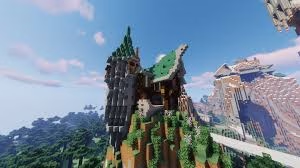
TSM just learned an expensive lesson: don’t automate Minecraft’s soul. The esports organization’s promotion of OSU AI—an application generating instant structures through text prompts—triggered unprecedented community backlash this week. Creators responded with fury, one prominent builder bluntly tweeting “You are f***ing idiots” at TSM’s official account. The controversy exposes gaming’s growing existential crisis: when AI automates creativity itself, what remains sacred?
Table of Contents
The OSU AI Minecraft Controversy Breakdown
| Aspect | Details |
|---|---|
| App Name | OSU AI (Minecraft builder) |
| Promoted By | TSM (esports organization) |
| Functionality | Generates structures via AI prompts |
| Community Response | Overwhelmingly negative |
| Core Issue | Automates Minecraft’s sacred building mechanic |
| Timing | February 2026 (post-TSM team cuts) |
Why Automating Building Crossed the Line
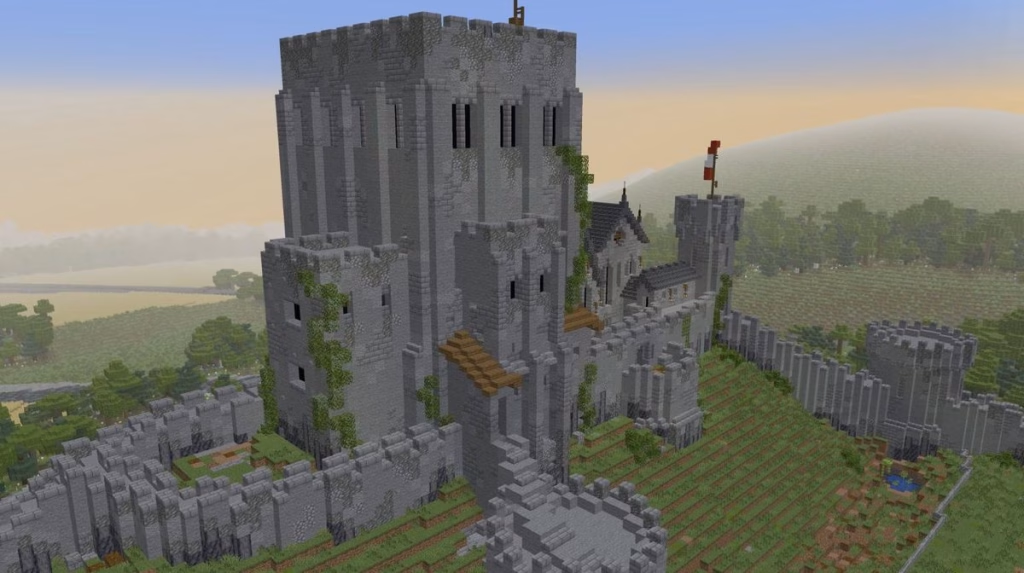
Building IS Minecraft: For 15 years, Minecraft’s identity centered on manual block-by-block construction. Players spent thousands of hours crafting towering cathedrals, pixel art masterpieces, and functional redstone computers. This meditative creative process defines the game’s therapeutic appeal—removing it with AI prompt generation fundamentally misunderstands what makes Minecraft special.
OSU AI promises “any structure in seconds.” Type “medieval castle” and watch algorithms instantly spawn elaborate fortifications complete with towers, moats, and banquet halls. While technically impressive, it bypasses the journey that gives Minecraft builds meaning. The community’s visceral reaction stems from recognizing this tool doesn’t enhance creativity—it replaces it entirely.
The Sacred vs Automated Debate: Minecraft builders distinguish between helpful tools (WorldEdit for large-scale projects) and creativity-killing automation. WorldEdit accelerates tedious tasks while requiring architectural vision and execution skill. OSU AI eliminates both—users need only describe desired outcomes, divorcing results from artistic input or technical mastery.
TSM’s Tone-Deaf Timing
The backlash intensified due to TSM’s recent history. The organization recently dropped most competitive rosters including VALORANT, League of Legends, and Counter-Strike 2 teams. Watching TSM promote AI tools while abandoning human players read as symbolic: replacing authentic talent with algorithmic shortcuts.
“They fire players then promote apps that automate gaming’s creative soul,” summarized one viral tweet capturing community sentiment. TSM’s pivot from supporting esports competitors toward monetizing AI applications exemplifies broader industry anxieties about sustainable business models prioritizing quick returns over community investment.
For context on esports organizations’ financial struggles, explore our esports sustainability crisis analysis examining why major orgs operate perpetually in the red despite industry valuations.
Creator Community United Front
Prominent Minecraft YouTubers, builders with millions of followers, and modding communities issued statements condemning OSU AI. These creators built careers showcasing building techniques, time-lapse constructions, and architectural tutorials. Tools that generate completed builds threaten their content ecosystem’s foundation—why watch 40-minute building guides when AI delivers results instantly?
The unified response revealed gaming communities’ growing sophistication around AI ethics. Rather than blanket anti-technology sentiment, creators articulated nuanced positions: AI assisting ideation or generating reference materials = acceptable; AI replacing the actual creative act = unacceptable. This distinction matters for future tool development in gaming spaces.
Broader Implications for Gaming & AI
What Remains Human? OSU AI represents a tipping point in gaming automation debates. AI already assists game development (procedural generation), enhances accessibility (dyslexia-friendly fonts), and improves matchmaking algorithms. But automating player expression—the act of play itself—crosses philosophical boundaries many gamers won’t accept.
The question extends beyond Minecraft: Should AI complete Dark Souls boss fights? Generate Stardew Valley farm layouts? Compose Elden Ring character builds? Each proposition sounds absurd because games exist as experiences, not merely outcomes. Minecraft’s controversy crystallizes this principle—AI delivering results without participation defeats gaming’s entire purpose.
Economic Desperation Signal: TSM’s pivot toward AI monetization amid team cuts suggests esports organizations increasingly prioritize revenue experiments over competitive integrity. When financial pressures force choices between supporting human players or licensing automation tools, the community interprets these priorities as existential threats to gaming culture itself.
Understanding competitive Minecraft’s technical depth? Our advanced building techniques guide showcases redstone mechanics, structure optimization, and creative workflows that demonstrate why manual building matters.
Industry Response & Moving Forward
Microsoft/Mojang’s Silence: As of February 14th, Minecraft’s developer Mojang (owned by Microsoft) hasn’t commented on OSU AI specifically. Their Terms of Service technically prohibit mods that “automate gameplay,” but enforcement remains inconsistent. Community members demand clearer policies distinguishing acceptable automation tools from creativity-replacing applications.
TSM’s Damage Control: Following overwhelming negative feedback, TSM quietly deleted promotional tweets and issued vague statements about “listening to community feedback.” Whether this represents genuine reconsideration or temporary PR management remains unclear—the organization hasn’t explicitly discontinued OSU AI promotion.
What This Means for Minecraft’s Future
The OSU AI controversy won’t kill Minecraft, but it established community boundaries around acceptable automation. Future tools leveraging AI must emphasize augmentation over replacement—assisting human creativity rather than substituting for it completely.
Minecraft’s 15-year success stems from empowering individual expression through accessible yet deep mechanics. Tools preserving this philosophy (structure planners, palette generators, schematic editors) will gain acceptance. Tools promising to bypass creativity entirely will face continued resistance from communities defending what makes their favorite games meaningful.
The “you are f***ing idiots” response wasn’t just profanity—it was gamers asserting that some experiences shouldn’t be optimized, automated, or expedited. Sometimes the point is the process, not the product.
FAQs
Is OSU AI officially affiliated with Minecraft or Mojang Studios?
No, OSU AI is a third-party application with no official connection to Mojang Studios or Microsoft. Its use may violate Minecraft’s Terms of Service regarding gameplay automation.
Will TSM continue promoting OSU AI despite the backlash?
TSM removed promotional posts and issued vague “listening to feedback” statements but hasn’t explicitly discontinued involvement. Community monitoring continues as of February 2026.