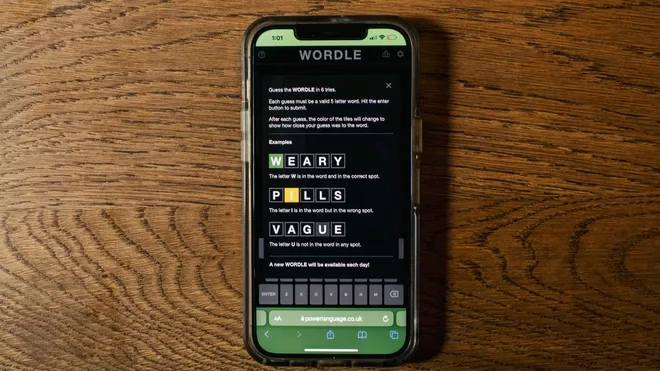
Are you trembling on the edge of a broken streak? Don’t worry, we have all been there. The daily Wordle can shift from a relaxing morning ritual to a brain-bending puzzle in seconds. If you are stuck on the April 21, 2026, challenge, we have the essential hints to guide you toward the solution without spoiling the fun immediately.
Clues to Guide You
Before we reveal the answer, let’s warm up your guessing engine with a few subtle clues:
- Vowels: There are two vowels in today’s word.
- Starting Letter: The word begins with the letter ‘F’.
- Meaning: It relates to strength, resilience, or the structural framework of an object.
Think about words that describe an attitude of endurance or the skeleton of a building. If you are still scratching your head, the answer is waiting for you below.
For those fascinated by the probability and strategy behind guessing five-letter words, the Wordle Wikipedia page offers a deep dive into the game’s mathematics.
Quick Stats
Here is a compact look at today’s puzzle profile:
| Feature | Details |
|---|---|
| Date | April 21, 2026 |
| Starts With | F |
| Ends With | E |
| Difficulty | Medium |
| Repeated Letters | No |
The Big Reveal
If the hints didn’t click, it’s time to save your streak. The Wordle answer for April 21, 2026, is FRAME.
Whether it refers to the frame of a picture or the frame of mind, this word is a solid addition to your vocabulary. Don’t forget to share your green grids without spoiling the answer for your friends!
For more daily puzzles and gaming guides, keep following TechnoSports.
Frequently Asked Questions (FAQs)
Q1: Does today’s Wordle answer have any repeating letters?
A: No, the answer for April 21, 2026, contains five unique letters with no repetitions.
Q2: What is the best starting word to solve this puzzle?
A: A strong starting word like “STARE” or “CRANE” would have helped identify the ‘R’, ‘A’, and ‘E’ early on.