Sandfall Interactive’s critically acclaimed RPG Clair Obscur: Expedition 33 just lost two prestigious Indie Game Awards after the studio admitted using generative AI during development. The stunning reversal has ignited fierce debate about AI’s role in game development and what constitutes honest disclosure.
Table of Contents
Clair Obscur Expedition 33 Controversy Timeline
| Detail | Information |
|---|---|
| Game Release | April 24, 2025 |
| Initial Awards Won | Game of the Year, Debut Game (Indie Game Awards) |
| Controversy Date | December 18, 2025 |
| AI Admission | Producer François Meurisse |
| Awards Status | Revoked (given to runners-up) |
| Current Standing | Still eligible for other awards |
What Exactly Happened?
On December 18, 2025, during the Indie Game Awards ceremony, Clair Obscur: Expedition 33 won both Game of the Year and Debut Game awards. Hours later, the celebration turned sour when producer François Meurisse confirmed the game utilized generative AI during its development process.
The revelation contradicted Sandfall Interactive’s earlier submission statement claiming no AI was used, per Six One Indie’s strict anti-AI policy. According to their FAQ, they maintain a firm stance that any generative AI use throughout development disqualifies games from nomination, regardless of intent or implementation scale.
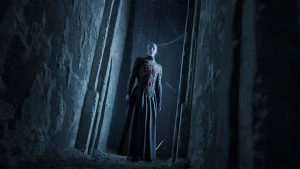
The controversy deepened when players discovered AI-generated placeholder textures that shipped in the final game—specifically a poster that appeared artificially generated. While Sandfall quickly patched these assets out after community feedback, the damage was done. The Indie Game Awards retracted both trophies, awarding Game of the Year to Blue Prince and Debut Game to Sorry We’re Closed instead.
For more gaming news and industry updates, check our latest gaming coverage and RPG reviews section.
How Was AI Actually Used?
According to limited developer statements, the AI implementation remained confined to pre-production phases and placeholder assets. Meurisse clarified that generative AI helped with early conceptual work and temporary images during development, all of which were supposedly replaced before launch—except for those that slipped through quality assurance.
Industry insiders suggest this represents common practice in modern game development, where AI tools assist with rapid prototyping, concept art iterations, and placeholder generation. No AI was reportedly used for voice acting, character models, level design, coding, or other core gameplay elements, with 99.9% of development completed by human hands.
However, the Indie Game Awards’ zero-tolerance policy makes no distinction between placeholder use and final product implementation. Their rules explicitly state any generative AI involvement during development renders games ineligible, period.
The Community Is Deeply Divided
Gaming communities remain split on whether the punishment fits the crime. Supporters of the decision argue that rules exist for a reason and developers must follow submission guidelines they agreed to, especially regarding transparent disclosure about development tools and methods.
Critics counter that AI exists throughout modern gaming—in NPC behavior, procedural generation, upscaling technologies, and development pipelines—making blanket bans increasingly performative. Kingdom Come: Deliverance 2 Director Daniel Vávra defended Larian Studios’ similar AI admission, calling the backlash “AI hysteria” and noting that AI could reduce development time from seven years to potentially one year with smaller teams.
The irony hasn’t escaped observers that a game celebrating artistic expression through its Belle Époque-inspired aesthetic would face consequences for using AI-generated art, even temporarily. According to Steam’s community hub, player reception remains overwhelmingly positive with ratings unchanged by the controversy.
Impact on Clair Obscur’s Legacy
Despite losing the Indie Game Awards, Clair Obscur: Expedition 33 retains its record-breaking haul from The Game Awards 2025, where it won multiple categories including recognition for its innovative turn-based combat system, stunning visual design, and musical score. The game remains eligible for mainstream awards that don’t prohibit AI use during development.
The controversy hasn’t affected sales or critical reception, with the game maintaining “Overwhelmingly Positive” reviews and continuing to dominate RPG discussions. Sandfall’s transparency about AI use—however belated—has earned respect from some corners, while others view it as insufficient disclosure during the submission process.
FAQs
Why did Clair Obscur: Expedition 33 lose its Indie Game Awards?
The Indie Game Awards revoked Clair Obscur’s Game of the Year and Debut Game awards after Sandfall Interactive admitted using generative AI during development on December 18, 2025. When submitting the game, representatives agreed no AI was used, violating the ceremony’s strict anti-AI policy. Even though the AI-generated assets were placeholder images later patched out, the organization maintains zero tolerance for any AI involvement throughout development.
Does this affect Clair Obscur’s other awards and recognition?
No, the disqualification only affects the Indie Game Awards specifically. Clair Obscur retains all awards from The Game Awards 2025 and other ceremonies that don’t prohibit AI use in development. The game remains critically acclaimed with overwhelmingly positive reviews on Steam and continues being eligible for future awards from organizations without similar AI restrictions.